
HOME - Why Agencies Prefer WordPress Hosting Built for Managing Many Client Sites
 Why Agencies Prefer WordPress Hosting Built for Managing Many Client Sites
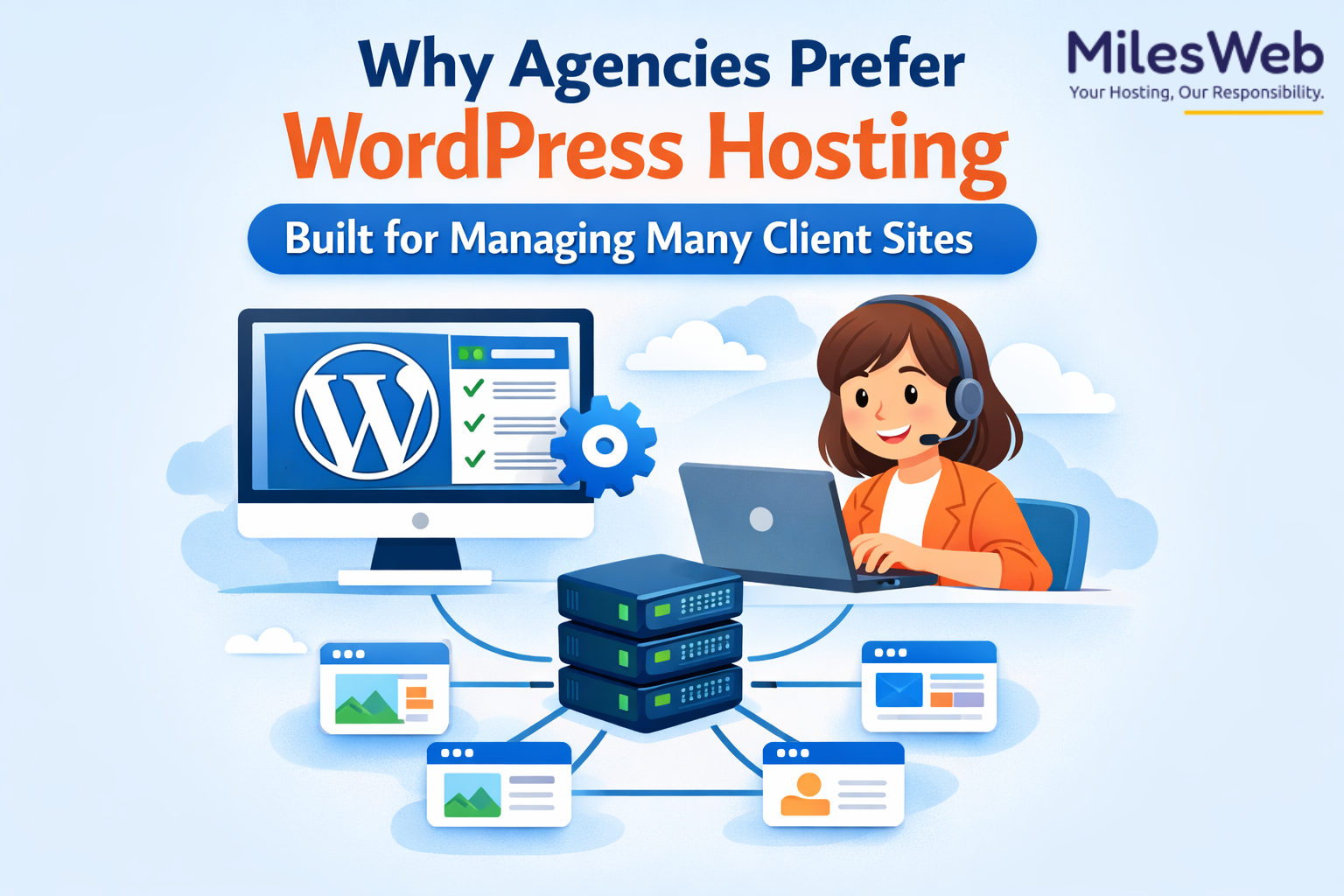
Agencies are increasingly using WordPress hosting as they simultaneously manage multiple projects on WordPress. They require centralized dashboards, scalable architectures, and resource isolation to minimize operational risk, especially as client expectations continue to rise. WordPress hosting for agencies empowers teams to manage multiple installations within a single optimized environment.
Clients also want to see results, so demand for the fastest WordPress hosting has grown as a result of how people use the internet and how search engines operate. According to Google, if a website takes longer than 3 seconds to load, 53% of mobile visitors will leave before it finishes loading. Page load speed directly impacts both bounce rate and conversion rates. Therefore, fast server response time, optimized cache layers, and global content delivery networks are necessary features for an agency to succeed.
The Operational Challenges Agencies Face
Many agencies manage 10, 20, or even 50 websites simultaneously for multiple clients, which means each site will need plugin updates, theme modifications, uptime monitoring, and security checks. If agencies use a standard hosting environment, their staff waste time switching back and forth between different control panels when managing multiple accounts across different environments.
Security is still a critical concern for online businesses. Sucuri reported that 96.2% of all websites they cleaned for infection in 2022-2023 were WordPress-based sites. This fact does not mean that WordPress is insecure. It means that it is essential for agencies to do preventive maintenance on WordPress websites and to implement security controls at the server level.
A hosting provider for agency clients provides each agency with an isolated hosting environment for every WordPress installation. This means if one website is compromised, then all other websites hosted on this service will not be affected by the compromised site. By containing the website against other hosted websites, risk is greatly reduced, and responding to security incidents becomes simpler and quicker.
Centralized Management Saves Time
Profitability is directly impacted by the effective use of time. When developers are stuck in repetitive maintenance for many hours each week, it reduces the agency’s ability to bill for their time. Centralized dashboards will enable the team to receive updates, perform backups, and manage their staging environment all from one dashboard.
With automated backups, agencies will receive a daily backup and be able to restore their data with one click. With this feature, if a user accidentally makes an unintended change or there is a conflict with a plugin, they can restore their data to the last backup with minimal downtime. The agency no longer needs to rely on manual backup plugins, which can fail to receive its automated backups.
Performance Impacts Client Revenue
Websites use speed to create an enjoyable user experience, along with improving overall visibility within search engines. Websites that load in 1 second statistically have three times greater conversion rates compared to similar sites that take 5 seconds to load (according to Portent). Not only is it obvious that as load time increases, so too do conversion rates decline.
Agencies know that hosting performance has a direct correlation to successful performance metrics. Current technology enables developers to deploy modern server stacks, object caching, and optimize databases to create consistent load times regardless of all traffic spikes.
Search engines continue to provide website owners the greatest value by focusing on performance as a core component of their exponential growth. Google continues to reinforce this message, as page experience signals will be ranking factors in their future algorithms. The fastest WordPress hosting greatly reduces the chance of poor SEO performance or decreased client revenue opportunities.
Scalability for Growing Client Portfolios
Agencies change all the time. They take more client projects, which means they need to host more sites. Therefore, if you’re a provider offering seamless scalability, you won’t have any future migration issues. When using a cloud-based infrastructure, you have two options: vertical scaling (adding resources) and horizontal scaling (adding servers).
During marketing campaigns or during busy shopping seasons, there are often large increases in traffic to your website that can overwhelm a traditional shared hosting environment. Managed environments can automatically allocate additional resources to your website. Agencies using a scalable infrastructure will not have to worry about emergency upgrades or downtime.
Role-Based Access and Team Collaboration
Development agencies provide role-based access to ensure that all team members are granted the appropriate permission level. Rather than sharing master credentials with all members of the organization, agencies provide access permission to administrators.
The development agency uses hosting dashboards that contain collaboration tools. This leads to more effective communication between technical and non-technical staff, resulting in overall access across multiple projects.
Concluding Insights
The agencies responsible for managing multiple websites for different clients experience a lot of pressure from managing their operations, security risks, and expected performance level. Hosting services designed specifically for these agencies provide centralized management, isolate their clients’ websites, automatic data backup, and provide scalable physical implementations of their infrastructure.
To ensure their customers have fast and efficient websites that meet modern speed standards based on both user behavior and search engine requirements, these agencies need to use the fastest possible hosting services.
0 Comment